


What is Dandruff ?
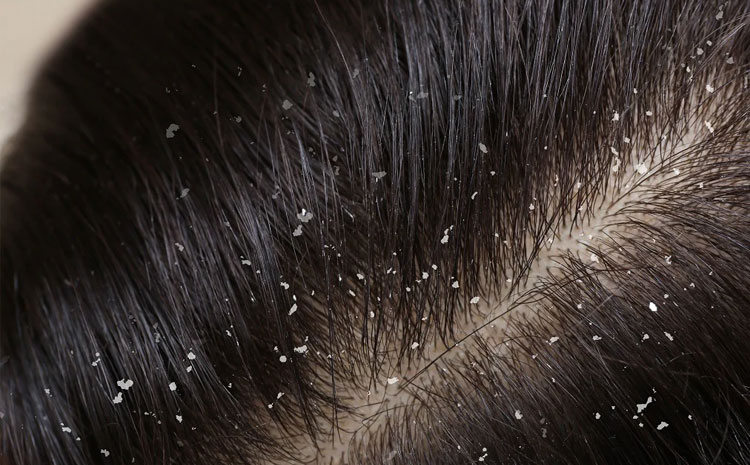
What is Dandruff?
Dandruff is a common scalp condition in which small pieces of dry skin flake off from the scalp and is usually associated with itching.
Dandruff is considered to be a mild form of an inflammatory skin disorder called “Seborrhoeic Dermatitis.”
What is the Difference Between Dandruff and Seborrhoeic Dermatitis?
Dandruff typically affects only the scalp and is a mild form with loose, adherent flaking.
Seborrhoeic Dermatitis can extend beyond the scalp and affect the folds beside the nose, ears, eyebrows, beard area, upper back, and chest.
Redness and itching of the skin are seen along with flaking, which may be dry or yellowish and greasy in nature.
What Causes Dandruff / Seborrhoeic Dermatitis?
The exact cause is unknown, but possible causes include:
- Increased oil (sebum) production and secretion
- Increased numbers of normal skin yeasts (Malassezia)
- Genetic predisposition
Common triggers (factors that may worsen the condition) include:
- Oily skin or scalp
- Emotional stress
- Cold and dry weather
- Poor hygiene or infrequent shampooing
Dietary factors do not play a role.
Seborrhoeic Dermatitis is also more common and severe in individuals with HIV infection or Parkinson’s disease.
What Does Seborrhoeic Dermatitis Look Like?
Seborrhoeic Dermatitis usually manifests in adolescence or adulthood, but it can also occur in children as:
- Cradle cap on the scalp
- Rash in the diaper (nappy) area
Seborrhoeic Dermatitis can present as itchy, flaky skin or as a rash without symptoms.
Common manifestations include:
- Itchy scalp
- White flakes on shoulders of dark clothing
- Scaly facial skin
- Facial rash over eyebrows, nose, and ears
- Recurrent ear eczema – itchy, flaky skin or oozing in the ear canal
- Oily scalp and facial skin with dry flakes
- Eyebrow or beard rash
- Rash on the trunk (mid-chest or mid-back) with dry flakes and red spots
- Rash in body folds (armpits, groins, under the breasts) with redness and scaling
Is Seborrhoeic Dermatitis Hereditary? Is it Contagious?
Seborrhoeic Dermatitis has a genetic predisposition and may be seen in other family members.
It is not contagious.
The fungi found on the skin are part of the normal skin flora; their presence alone does not confirm disease.
Are There Any Laboratory Tests to Diagnose Dandruff / Seborrhoeic Dermatitis?
Diagnosis is mainly based on history and clinical examination by a dermatologist.
There are no specific laboratory tests for Seborrhoeic Dermatitis.
However, skin scrapings and biopsies may be performed to rule out other conditions such as:
- Ringworm (Tinea)
- Psoriasis
Which Shampoos Can Be Used for Dandruff?
Different types of medicated shampoos may be prescribed, including:
- Tar-based shampoos
- Ketoconazole-based shampoos
- Zinc pyrithione-based shampoos
- Selenium sulphide-based shampoos
- Ciclopirox-based shampoos
Usage guidelines:
- Use the shampoo at least twice a week for 3–4 weeks.
- Leave the shampoo on for 5–7 minutes before rinsing off.
- Wash all affected areas — including the scalp, ears, face, and chest — with the shampoo.
How Can Seborrhoeic Dermatitis Be Treated?
Treatment options include:
- Antidandruff shampoos and cleansers
- Anti-inflammatory creams/lotions
- Antifungal medications
- Keratolytics (to remove scales)
Mild topical corticosteroids (preferably lotions) may be prescribed for 1–3 weeks to reduce inflammation.
For areas like the face, ears, and eyebrows, cream-based topical steroids may be used.
Topical calcineurin inhibitors or topical antifungals can be used alone or combined with mild steroids.
Oral antifungal medications are reserved for severe cases.
All treatments should be used under the guidance of a dermatologist.
The choice of treatment depends on the site and severity of the condition.
Maintenance therapy is often needed to prevent relapse.
Can Seborrhoeic Dermatitis Be Cured? Can It Recur?
Seborrhoeic Dermatitis improves with treatment, but there is no permanent cure.
Increased oil (sebum) production is an individual tendency and may cause recurrences.
People prone to recurrent Seborrhoeic Dermatitis may need periodic retreatment.
Disclaimer
This article is intended for general patient information only and is not for self-medication.
There is no legal liability of IADVL arising from any adverse consequences due to self-treatment.
Images used are for educational purposes only and should not be used elsewhere.
