


Hair Loss
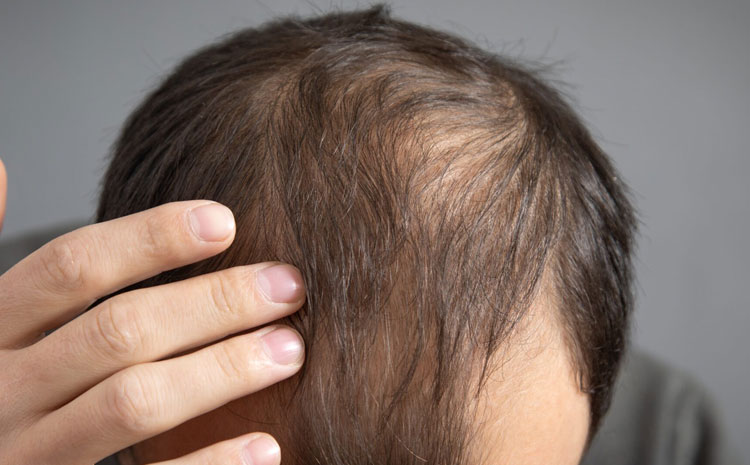
What is Androgenetic Alopecia?
Androgenetic Alopecia is the most common cause of hair loss seen in both men and women. It is due to genetic or hormonal causes. It is also called as common baldness, male pattern hair loss, female pattern hair loss, premature baldness.
What is male pattern hair loss?
Male pattern hair loss (MPHL) is the most common type of hair loss in men.
- Baldness appears gradually on the crown of the scalp or as receding hairline at the frontal and thinning of hair over temple areas.
- It affects about 30% of men by the age of 30 and 50% of men over the age of 50.
What are the causes of male pattern hair loss?
Both genetic and hormonal factors are responsible.
Testosterone is naturally converted in the body to dihydrotestosterone (DHT) which causes a change in the hair follicles on the scalp. Increased levels of DHT have been found in the balding scalp.
The hairs become progressively smaller in diameter, shorter in length and lighter in colour until eventually the follicles shrink completely and stop producing hair.
Is male pattern hair loss hereditary?
Yes. It can be inherited from either or both parents.
How does MPHL manifest? When does MPHL manifest?
A receding frontal hairline is the usual pattern and there may be loss of hair from the top of the head.
Hairs in the affected areas are thin and short before they become absent.
Men become aware of scalp hair loss or a receding hairline at any time after puberty but most of them become aware of it as they approach their thirties. Hair loss may cause significant psychological difficulties.
How is MPHL diagnosed? Are there any tests to diagnose MPHL?
A dermatologist diagnoses MPHL chiefly on history and clinical examination; a simple test such as dermatoscopy aids in the clinical diagnosis.
The diagnosis is usually based on the clinical examination and history of hair loss on the front/top of the head or receding hairline, the pattern of hair loss and a family history of similar hair loss.
The skin on the scalp looks normal on examination.
Can MPHL be cured?
There is no cure but medical and surgical treatments which are available may improve the condition. However, it tends to progress very slowly, from several years to decades. An earlier age of onset may lead to quicker progression.
Can MPHL be treated?
Male pattern baldness is progressive and it does not improve or reverse without treatment. Minoxidil and Finasteride are commonly prescribed medications which may restore the hair to some extent.
Minoxidil
- 5% minoxidil liquid or foam applied to the scalp may slow down the progression of hair loss and partially restore hair.
- It is applied to the affected scalp (not the hair) using a dropper or pump spray device and should be spread over the affected area lightly.
- Minoxidil can cause reactions such as dryness, redness, scaling and/or itchiness at the site of application and should not be applied if there are cuts or open wounds.
- At least 6 months of application is required to notice any benefit.
- Minoxidil solution may cause an initial hair fall in the first 2-8 weeks of treatment, and this usually subsides when the new hairs start to grow.
Finasteride
- Finasteride tablets reduce levels of DHT (hormone), which may slow hair loss and possibly help regrowth of hair.
- Continuous use for 3 to 6 months is required before a benefit is usually seen.
- Side-effects include decreased libido and erectile problems.
Surgical treatments
- Hair restoration surgery or transplantation is a procedure where hair follicles are taken from the back and sides of the scalp and transplanted onto the bald areas.
- Scalp reduction involves removing a section of the bald area and stretching the hair-bearing scalp to cover the gap.
Wigs and Hair Pieces
Wigs, toupees and hair extensions are helpful in disguising hair loss.
Scalp Camouflage
Spray preparations containing small pigmented fibres are available and may help to disguise the condition in some individuals. These preparations may wash away if the hair gets wet (rain, swimming, perspiration) and tend to last until the next shampoo.
Light Therapy
A variety of laser and light sources have been tried with varied success.
Future Directions
Various growth factors and platelet-rich plasma (PRP) have shown promising results in male pattern baldness.
How long should one continue the treatment for MPHL?
Treatment of MPHL is effective only as long as treatment is continued.
What is female pattern hair loss?
Female pattern hair loss (FPHL) is the most common type of hair loss seen in women, usually occurring in the 40–60 years of age.
What causes FPHL?
It is due to genetic and hormonal factors. There is gradual thinning of scalp hair at the centre and increased shedding. Bald patches are uncommon in women.
May be associated with conditions in which androgen (a group of hormones) levels are elevated such as polycystic ovarian syndrome (PCOS). Acne, increased facial hair, irregular periods and infertility are all signs of PCOS.
Is female pattern hair loss hereditary?
Yes. It can be inherited from either or both parents.
How does FPHL manifest? When does FPHL manifest?
There is widespread thinning of the hair, mainly on the crown of the scalp. It may initially start as widening of the hair parting areas.
In females, the hairline at the front of the scalp often remains normal unlike in men where receding of the frontal hairline is observed.
FPHL usually manifests after 40 years of age. Earlier onset may be seen in PCOS patients.
How is FPHL diagnosed? Are there any tests to diagnose FPHL?
A dermatologist diagnoses FPHL chiefly on history and clinical examination; a simple test such as dermoscopy aids in the clinical diagnosis.
The diagnosis is usually based on the history of gradual thinning of hair or increased hair shedding on the top of the head, the pattern of hair loss and any family history of similar hair loss.
Most FPHL patients do not have any underlying hormonal abnormalities except in few cases where excess androgen levels are found. Sometimes tests are done to rule out PCOS and congenital adrenal hyperplasia.
Can FPHL be cured?
FPHL can be controlled with appropriate treatment. However, it tends to progress very slowly, from several years to decades.
What are the treatment options in FPHL?
- Topical minoxidil and various hormonal treatments can be used to treat FPHL.
- 2% or 5% minoxidil solution is applied to the scalp to slow down progression and partially restore hair in some women.
- Minoxidil should be used for at least 6 months before any benefit may be noted.
- Oral treatments such as spironolactone, cyproterone acetate, flutamide and cimetidine can block the action of DHT.
- Hair transplantation may also be considered.
- Wigs, toupees and hair extensions can help disguise hair loss.
Why treat FPHL?
FPHL is not only a cosmetic issue, but causes significant psychological distress. Women with FPHL may have low self-esteem, depression, and feelings of unattractiveness. Appropriate treatment based on patient needs should therefore be instituted.
Causes of Hair Loss
Hair loss or Alopecia is a common condition affecting millions of people worldwide. Often perceived as a purely cosmetic issue, hair loss can significantly impact psychological well-being. Understanding the underlying causes is crucial for effective management and treatment.
- Hereditary hair loss
- Age
- Alopecia areata
- Cancer treatment
- Childbirth, illness, or stress
- Hair care damage
- Hairstyle traction
- Hormonal imbalance
- Scalp infection
- Medications
- Hair pulling (Trichotillomania)
- Scarring alopecia
- STIs like Syphilis
- Thyroid disease
- Nutritional deficiencies
- Friction
- Exposure to harmful elements
Treatment for Hair Loss
Effective treatment for hair loss begins with finding the cause. A board-certified dermatologist can help identify and treat the specific reason behind hair loss.
When hair may shed on its own
This can happen if you have recently:
- Had a baby
- Recovered from a major illness or had surgery
- Underwent cancer treatment
- Lost 20 pounds or more
- Developed alopecia areata
Changing your hair care or hairstyle may help
Some hairstyles and hair care habits can damage hair, leading to hair loss. Changing these habits can stop further damage.
When do dermatologists recommend treatment for hair loss?
While hair may regrow on its own, dermatologists may recommend treatment to help it grow faster or prevent further loss in cases like androgenetic alopecia, alopecia areata, or telogen effluvium.
Common treatment options include:
- Hormone-stabilizing medications
- Vitamins, minerals, and supplements
- Low-level light therapy (LLLT)
- Microneedling
- Injections of immunomodulators
- Platelet-rich plasma (PRP)
- Hair transplant
- Wigs and concealers
Conclusion
It is of utmost importance to visit a board-certified dermatologist for an accurate diagnosis and treatment. If you need regrowth treatment, the earlier you start, the better your results. Self-care and a customized hair care plan play an essential role in maintaining hair health.
Disclaimer: This article is only for general patient information and is not intended for self medication. There is no legal liability of IADVL arising out of any adverse consequence to the patient. Subsequent to its use for self treatment of the disease images adjust for the depiction of the condition and is not to be used for any other purpose.
