


What is Eczema?
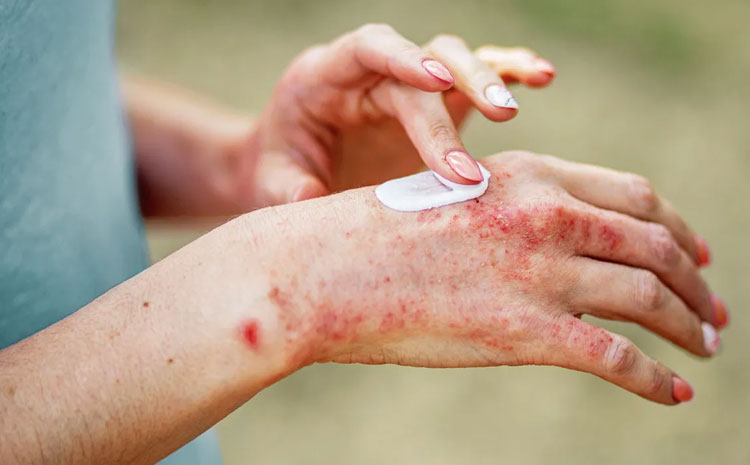
Eczema (Greek ‘Ekzein’, to ’boil over’) is a skin condition that causes your skin to become red, dry, itchy and bumpy as well as inflamed. Eczema makes your skin more sensitive and weakens your skin’s natural barrier, making it harder to hold in moisture and keeping out things like germs, dirt, and irritants.
It is a common, chronic skin condition where it can appear time to time in the affected areas and it is not life threatening.
What Does Eczema Look and Feel Like?
Everyone’s eczema can look a little different, but here are the most common signs:
- Very dry or rough patches of skin
- Redness or dark spots
- Super itchy areas (sometimes you can’t stop scratching)
- Cracks, bleeding, or oozing if it gets really bad
- Thickened, bumpy, or leathery skin if you’ve had it for a long time
Where does Eczema often show up?
- Infants and young children: often appears on the face, cheeks, scalp, and the outside of the elbows and knees.
- In older children: may shift to the inside of the elbows, behind the knees, wrists, and ankles.
- In adults: more likely to appear on the hands, feet, arms, and the bends of the elbows and knees.
But really, it can appear anywhere.
What are the types of Eczema?
Eczema is broadly classified into two types:
Endogenous Eczema (having an internal cause or origin)
- Atopic Eczema
Where it shows up: Anywhere on the body, but usually on the face, neck, and behind the knees or elbows.
What it looks like: Red, dry, itchy patches of skin.
Cause: Often linked to allergies, asthma, or a family history of eczema. - Seborrheic Eczema
Where it shows up: Areas where there is hair, like scalp, eyebrows, chest and groins.
What it looks like: Red, flaky, greasy patches of skin.
Cause: Linked to an overgrowth of yeast on the skin, usually triggered by stress or weather changes. - Nummular Eczema
Where it shows up: Legs, arms, and torso.
What it looks like: Round, coin-shaped patches of itchy, dry skin.
Cause: Can be triggered by skin injury, cold weather, or even stress. - Asteatotic Eczema (Craquele or winter itch)
Where it shows up: Usually on the lower legs, arms, or torso.
What it looks like: Dry, cracked, and flaky skin, sometimes with itching.
Cause: Caused by extremely dry skin, usually worsened by cold or dry weather. - Stasis Eczema (Gravitational eczema or Varicose eczema)
Where it shows up: Lower legs, especially around the ankles.
What it looks like: Redness, swelling, and sometimes skin ulcers or sores.
Cause: Poor blood circulation, often related to varicose veins or other circulation issues.
Exogenous Eczema (caused by exposure of the patient’s skin to environmental harmful agents)
Contact Dermatitis
- Irritant Contact Dermatitis: Caused by things like soaps, chemicals, or cleaning products.
- Allergic Contact Dermatitis: Caused by common allergens like:
- Metals: Eg. Nickel (in jewellery, clips, watches), Chromium (in footwear and cement).
- Plants
- Antibacterial agents
- Rubber chemicals
- Hair dyes
- Various cosmetics and personal care products due to fragrance and preservatives.
- Where it shows up: Anywhere the skin comes in contact with the irritant or allergen.
- What it looks like: Redness, itching, or even blisters at the spot that came in contact with the irritant.
Photodermatitis
It develops due to exposure to sunlight or other forms of UV radiation. It can be a form of allergic contact dermatitis where the allergen needs UV light to activate and cause a reaction. The common photosensitising agents are drugs, cosmetics, perfumes, dyes, etc.
Myths About Eczema (And the Truth!)
- Myth: Eczema is contagious.
Truth: You can’t catch eczema. It’s an issue with the skin and immune system, not an infection. - Myth: Eczema happens because of poor hygiene.
Truth: Over-washing with harsh soaps can make it worse. - Myth: Scratching eczema will make it go away.
Truth: Scratching damages the skin, causes infections, and delays healing. - Myth: Eczema is just dry skin.
Truth: It involves inflammation, a weak skin barrier, and allergies — not just dryness. - Myth: If you find the “one” cause, you can get rid of eczema forever.
Truth: It usually has multiple causes — genetics, environment, allergies, weather, and stress. - Myth: You can cure eczema with the right lotion.
Truth: There is no complete cure yet. Moisturizers help manage symptoms. - Myth: Eczema only affects kids.
Truth: Adults can also develop eczema, even for the first time.
What are the tips for living with eczema?
Your treatment for eczema is unique to you and what caused your symptoms to flare up. Ways to control eczema could include:
- Consult a Dermatologist for using gentle or sensitive skin moisturizers throughout the day when you have dry skin.
- Apply topical medications to your skin as advised by your Dermatologist, like topical steroids if needed.
- Take oral medications as prescribed by your Dermatologist to reduce itchiness and swelling.
- Take baths or showers with warm, not hot, water.
- Avoid triggers: figure out what makes your eczema worse (like certain soaps or fabrics) and try to avoid them.
- Stay hydrated and drink at least eight glasses of water each day.
- Wear loose clothes made of cotton and other natural materials. Wash new clothing before wearing it. Avoid wool or synthetic fibers.
- Manage your stress and emotional triggers.
- Do not self medicate or depend on home remedies.
- Earlier initiation of treatment and long term follow up has better long-term outcomes.
Disclaimer: This article is only for general patient information and is not intended for self medication. There is no legal liability of IADVL arising out of any adverse consequence to the patient. Subsequent to its use for self treatment of the disease images adjust for the depiction of the condition and is not to be used for any other purpose.
Adult atopic may continue in the flexural pattern (as that of school going children) or become diffuse. Loss of eyebrow hair, folds under the eyes, raised black bumps on the skin are all clues to atopic dermatitis. Some occupations that expose one to cement, pollen, sawdust, or cleaning agents may lead to specific patterns of dermatitis on the hands, feet or uncovered areas of the body. Certain medications can also worsen symptoms.
