


What is Acne?
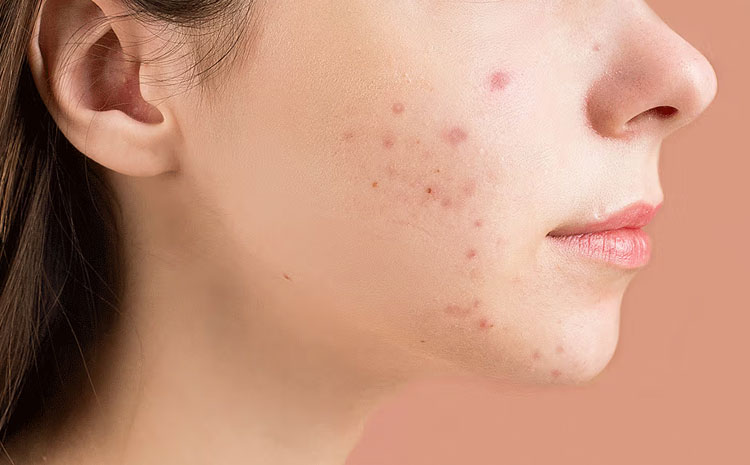
Acne (pimples) is an inflammatory skin disease, primarily involving sebaceous glands; affecting the face, but can also occur on the arms, back & chest.
How does one get Acne?
There are 4 key events in causation of Acne:
- Excess sebum (oil) in the skin: The oil producing glands in the skin are stimulated by hormones after puberty to produce more sebum.
- Clogged pores (pilosebaceous unit): The dead cells, bacteria & sebum form a plug at the outlet of the pilosebaceous follicle and appear as black heads (open comedones). If the plug remains below the surface it appears as whiteheads (closed comedones).
- Bacteria (P.Acnes): The bacteria causes inflammation in the pilosebaceous unit. P.Acnes also initiates comedone formation.
- Inflammation: This leads to formation of large solid bumps, pustules & fluid filled cavities called cysts.
How does Acne get aggravated (factors aggravating Acne)?
- Genetic factors: The type and severity of Acne a person gets is influenced by his genes…
- Pre-menstrual aggravations are commonly seen…
- Use of cosmetics (oil based), scrubs can aggravate Acne.
- A sudden bout of Acne following facials, clean- up, bleaching etc. is common.
- Sometimes multiple cysts in the ovaries called polycystic ovarian syndrome…
- Certain drugs like steroids, anti-tubercular medicines (isoniazid)…
- Abuse of topical steroid creams on the face often promoted as fairness creams…
- Acne can persist or appear post adolescence…
- Diet is an important factor in aggravating Acne…
- Emotional & physical stress can also aggravate Acne.
- Dandruff and Acne often co-exist.
How does acne appear?
- Acne usually starts at puberty and mainly affects the teens and young adults…
- Sometimes Acne extends beyond twenty five years or may start afresh…
- Acne can affect both males and females, it tends to be more severe in males.
- Acne lesions commonly occur on the face, but can be seen on the arms, chest, back and buttocks.
- The skin lesions in Acne include comedones (blackheads and whiteheads)…
What should one do if he/she gets Acne? Why should it be treated?
Acne can be successfully treated at any point of time in the disease timeline, however, consulting a dermatologist early in the course of disease can also prevent post Acne scarring.
How should one take care of an Acne prone skin?
- Wash the face 3-4 times daily with preferably soap-free cleansers & water.
- The scalp should be cleansed 2-3 times weekly to prevent and remove dandruff.
- Avoid all greasy cosmetics on the face. Look for a ‘non comedogenic’ cosmetic which is safer in Acne prone skin.
- Do not squeeze or pick the pimples. It can cause scarring.
What are the treatment modalities for Acne?
The medications include topical medications (applied to the skin) or systemic (which is taken internally).
- Topical treatment includes benzoyl peroxide, retinoids, azelaic acid, antibiotic creams (clindamycin), etc…
- Systemic treatment includes Antibiotics – azithromycin, doxycycline, minocycline & tetracyclines, Retinoids – isotretinoin, Hormonal therapy – oral contraceptive pills, anti-androgens…
- Some patients may also require chemical peel, laser and other technologies for faster and effective treatment.
- Your Dermatologist will decide & advise you on the appropriate medications after assessing your condition.
What should I do for my scars & blemishes?
- It is always better to prevent scars by early & proper treatment of severe Acne.
- Chemical peels such as glycolic acid & salicylic acid peels may be helpful for your marks.
- Dermatologists treat the scars by various methods such as microderm-abrasion, derma roller, laser (fractional lasers) and subcision.
- Keloidal scars may need intralesional injections or cryotherapy.
Can Acne recur?
Acne can clear completely, however it can recur at times. Any of the aggravating factors such as hormonal triggers, cosmetic use, emotional stress, topical steroid application, systemic medicines, dietary factors may play a role in the recurrence.
Why should we treat Acne?
Acne may resolve or subside over time. However, it may not clear on its own and may produce pus-filled lesions and large swellings which may leave permanent disfiguring scars, if left untreated.
Acne often causes poor self-image, depression & anxiety to the person afflicted by the condition.
The therapy recommendations and counseling by your dermatologist will help in easing the physical and psychological scarring caused by the disease.
Sequence of events in Acne – Illustrative representation
Disclaimer: This article is only for general patient information and is not intended for self medication. There is no legal liability of IADVL arising out of any adverse consequence to the patient. Subsequent to its use for self treatment of the disease images adjust for the depiction of the condition and is not to be used for any other purpose.
